Long-Haul Flights with Young Children: A Practical Guide and Useful Tips
Facing a long-haul flight with young kids (especially in the 0-5 age range) is often one of the main sources of anxiety for parents planning an on-the-road trip to the other side of the world. The good news? With the right organisation and mindset, the flight simply becomes the first leg of the adventure.
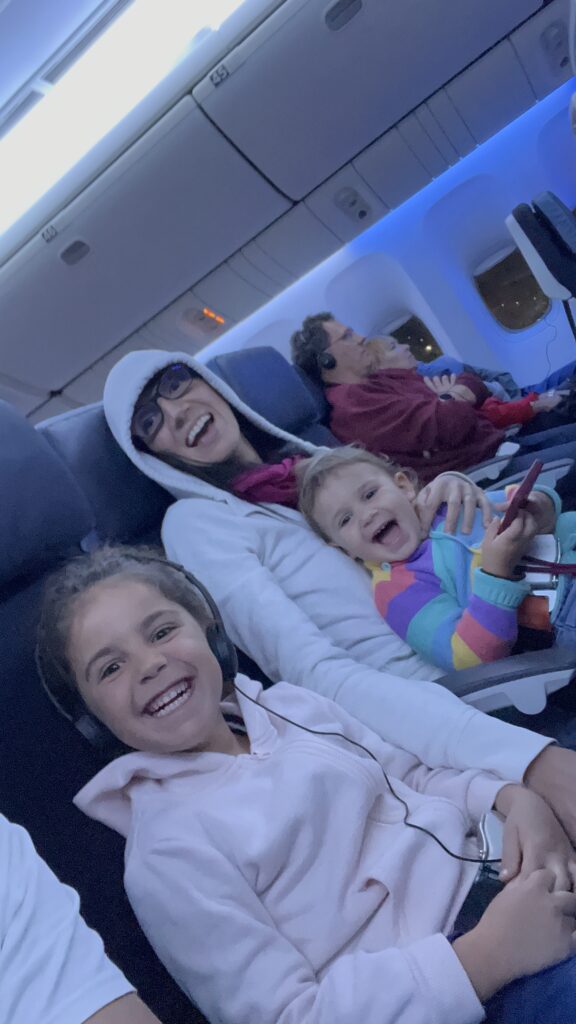
1. Choosing Flights and Seat Strategy
Flight planning starts at booking. Not all seats and times are equal when travelling as a family:
- Prefer overnight flights:For routes over 7-8 hours, flying at night lets you work with your children’s circadian rhythm. Once you’ve taken off and had dinner, the odds of them sleeping through most of the journey go up significantly. To help, bring aninflatable footrestto fill the gap between your seat and the one in front, turning it into a comfy bed.
- Onboard bassinet:If travelling with an infant (generally under 11kg or 10-12 months, depending on the airline), request the bassinet at booking. It also guarantees bulkhead seats with extra legroom.
- The aisle-seat rule:If your kids are older and have their own seat, always secure at least one aisle seat so you can get up frequently without climbing over other passengers for nappy changes or walks.
- Always ask about empty seats:Are there 3 of you in a row of 4, hoping the last seat stays empty? Ask the cabin crew right away — they can check on their tablets and confirm. If it’s free, they may even guarantee it stays that way.
2. The Perfect Hand Luggage: What to Keep Within Reach
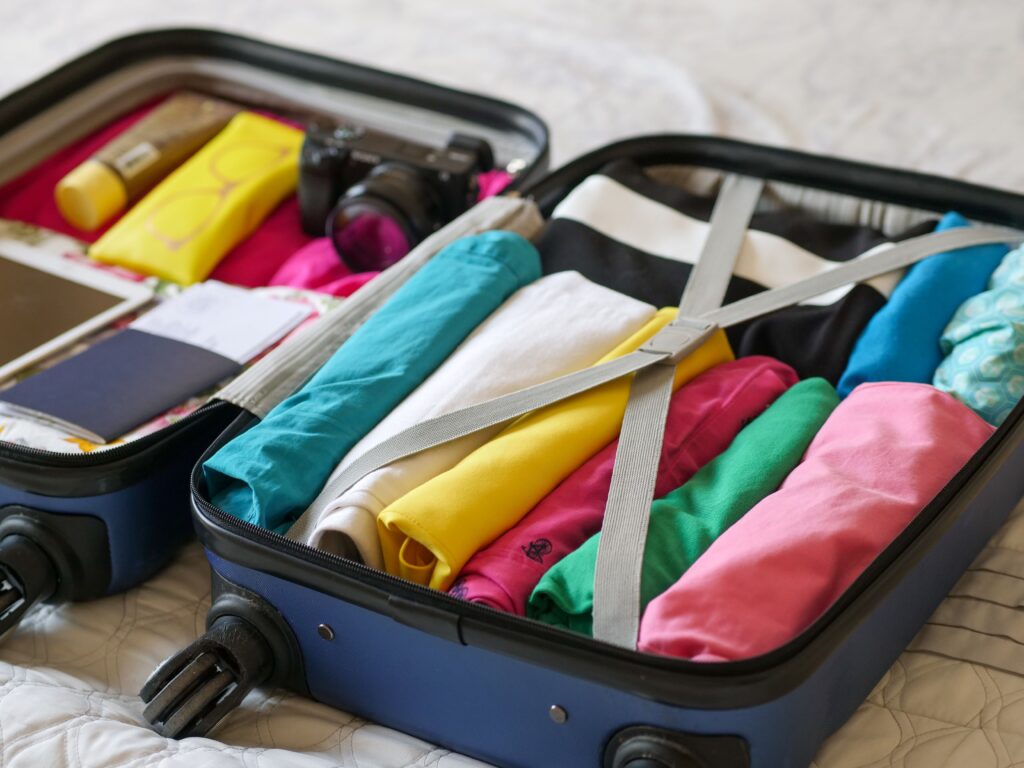
Avoid stuffing everything in the overhead bin. Prepare a dedicated backpack to keep under the seat in front of you with everything needed for immediate emergencies:
🎒 Change & Hygiene Essentials
- A full change of clothes for the kids (at least 2) + 1 spare top for mum and dad.
- More nappies than the flight duration would suggest (always plan for 5-6 hours of potential delay).
- Wet wipes and sealed hygiene bags for dirty clothes.
🍎 Snacks & Hydration
- Dry snacks (breadsticks, dried fruit, crackers) divided into small portions.
- Empty bottle/flask to fill after security.
- Baby food or purees (remember baby food is exempt from the 100ml liquid limit at security).
3. Handling Take-off, Landing and Ear Pain
Pressure changes during ascent and descent are the main cause of tears in young children. The key is to encourage swallowing:
- For babies:Breastfeeding, a bottle of water/milk, or a dummy during take-off and descent.
- For older kids:Something to chew, a soft sweet, or small sips from a water bottle.
- Check their nose:If your child has a slight cold, do a nasal wash before boarding to keep airways clear.
4. In-Flight Entertainment: The “Small Gift” Technique
Keeping attention up without stressing out your neighbours takes a staged strategy. One of the most effective techniques iswrapped gifts: bring small, cheap toys (water colouring books,stickers,sticker albums, small magnetic puzzles) and wrap them individually. Hand over a “little parcel” every 2 hours or whenever tiredness kicks in.
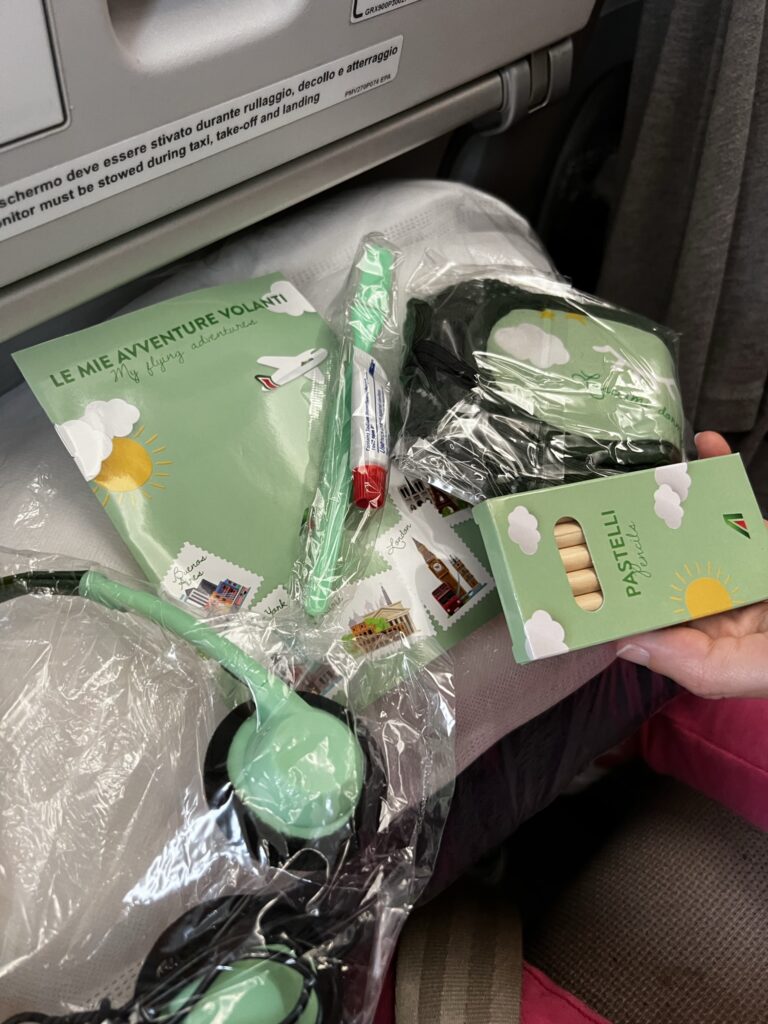
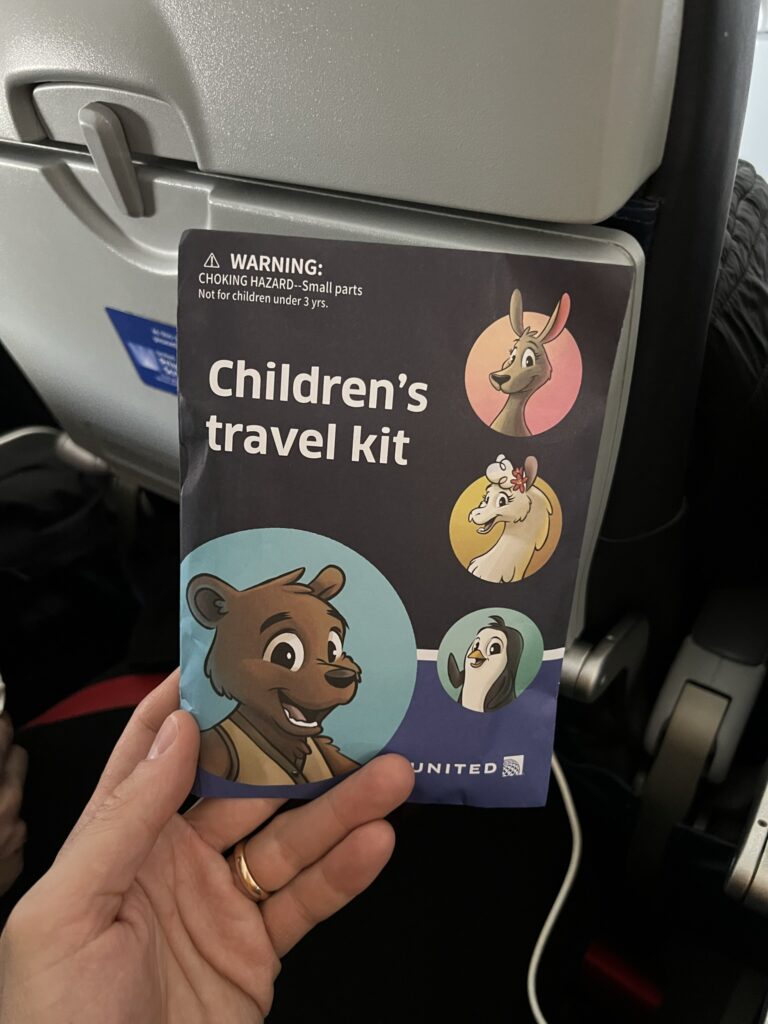
Small wrapped-up new toys: the secret to breaking up long flight hours!
💡 What about tablets/screens?Don’t feel guilty if, on a 10-hour flight, you reach for downloaded cartoons on a tablet or the in-flight entertainment system. It’s a genuinely useful tool — just remember to bringsoft kids’ headphoneswith an 85dB volume limiter to protect their hearing.
5. Arrival and Managing Jet Lag
Once you’ve landed, the main goal is adapting quickly to the new time zone:
- Get immediate exposure to sunlight to reset the body clock.
- Avoid letting kids sleep for hours during the day of arrival: favour short, tactical naps (max 45-60 minutes) to reach the evening in sync with local time.
- Be patient: kids generally need 2-3 days to fully adjust to a major time change.
Ready for your next trip?
Check out our#QuokkaAdviceguides to find practical destination-specific tips on climate, currency and transport!